The Vision That Begins in
the Dark
John 20:19-31
When Jesus
said, “Have you believed because you have seen me? Blessed are those who have
not seen and yet have believed,” He wasn’t simply contrasting sight and faith.
He was redefining what it means to see at all. Thomas relied on physical sight,
but Jesus was inviting him into a deeper kind of vision—one that begins where human
sight ends.
There is a
kind of seeing that only happens in the dark. Think of how the human eye works:
when the lights go out, the pupil widens, stretching itself to receive whatever
faint light might still be present. At first everything is unclear, but slowly
shapes emerge, outlines form, and what was invisible becomes visible. Darkness
doesn’t destroy sight; it trains it.
Faith works
the same way. It is not blindness. It is the widening of the soul’s pupil. It
is the capacity to perceive God when the usual sources of clarity have
disappeared. Jesus blesses those who believe without seeing because they have
learned to see with a different organ—not the eye, but the heart awakened by
trust.
Thomas, on
the other hand, wanted to see Jesus in the same way he had always seen Him. But
resurrection requires a new kind of vision. The risen Christ is not grasped by
the hand; He is grasped by faith. And this is why Jesus’ blessing is not a
consolation prize for those who missed the physical appearances. It is an
announcement that the deepest encounters with God happen beyond the realm of
the senses.
Now, there
are seasons when God seems hidden, when prayers echo back in silence, when
circumstances contradict promises. And this isn’t just a spiritual idea—it’s
something we see in real lives today. Sometimes the deepest clarity comes to
people not in moments of brightness, but in the hours when everything feels
lost.
Let me
share a true story from just last year. In February 2025, a 23 years old,
Australian hiker Hadi Nazari survived thirteen days lost in the vast wilderness
of Kosciuszko National Park. When his phone died and the tracks vanished, he
found himself alone in freezing darkness, convinced he would not make it out. He
withstood the long days and freezing nights on nothing more than wild berries
and two muesli bars. He later said that in those nights—when he could see
nothing and no help seemed near—he began to pray, steady his breathing, and
cling to the quiet conviction that God had not abandoned him. That fragile
trust, born in the dark, and the thirst to see his family, became the strength
that kept him moving until rescuers finally found him.
Hadi’s
experience reminds us of something essential about faith. These are not signs
of God’s absence. They are invitations for our spiritual sight to adjust. In
those moments, faith is not pretending everything is bright; faith is allowing
our inner vision to expand until we can perceive the faint glimmers of God’s presence
that were always there.
In the same
way, our souls require time to adjust to the dim places of life. We often want
immediate clarity, instant answers, and visible reassurance. Yet God, in His
wisdom, does not always work in the brightness we prefer. Sometimes He leads us
into the quiet shadows—not to abandon us, but to deepen us.
Consider
what happens if we panic in the dark. We strain, we rush, we grasp for
certainty—and in doing so, we actually see less. When we become still, what
seemed empty begins to reveal quiet presence and meaning.
Here, I would like to turn our attention towards
Jesus’ disciples. The disciples knew what it meant to walk with Jesus—to see
Him, hear Him, laugh with Him, and rely on His presence. But after His death,
and even more after His ascension, everything changed. The One they had
depended on was no longer physically with them. There were no more daily
instructions, no visible miracles before their eyes—only a promise and a
command.
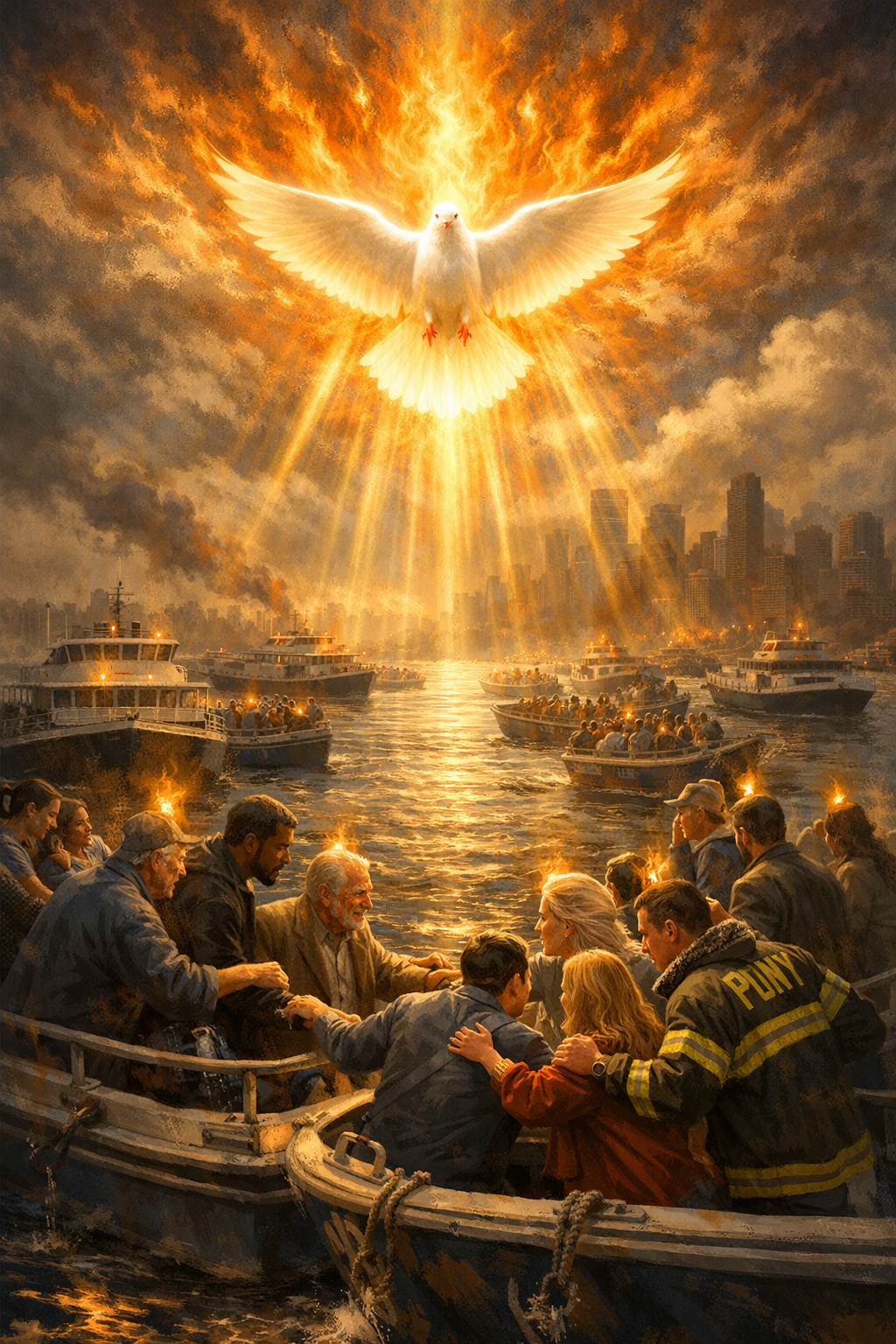
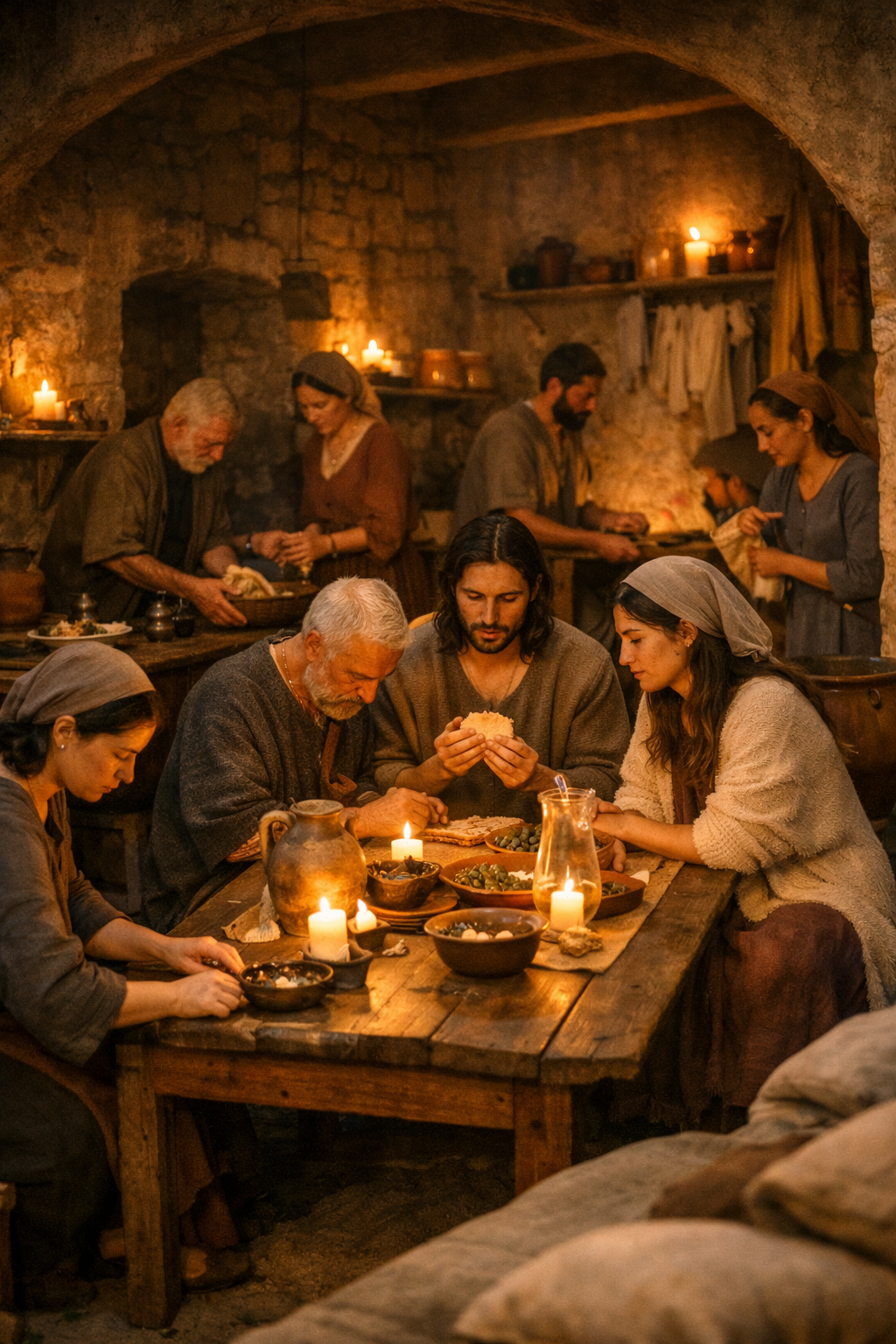
And in that in-between time—between the ascension and Pentecost—they
were forced into a new kind of faith. Not a faith built on sight, but a faith
that had to stand on memory, on promise, and on obedience. They had to learn to
carry forward what Jesus began, to step into a calling that was not smaller,
but greater—because now the mission rested in their hands.
This is the turning point of discipleship: when following Jesus is no
longer about walking beside Him, but about representing Him. When faith is no
longer sustained by what we see, but by what we are sent to do.
And perhaps that is where many of us stand today—not lacking faith, but
being invited into a deeper one. A faith that does not wait for visible
reassurance, but rises to live out what Christ has already entrusted to us.
So do not
fear the darkness. Stay. Trust. And let your vision adjust. For blessed are
those who learn to see, even when the light is dim.
And this is
the very faith Jesus honours with His words to Thomas. The blessing Jesus
speaks is not for the spiritually elite. It is for the ordinary believer who
keeps trusting when nothing is obvious. It is for the person who holds onto
hope when evidence is scarce. It is for the one who whispers “I believe” even
when the world feels dim. This is the faith that sees God because He lives
within us, not because He stands in front of us.
Thomas
eventually saw Jesus with his eyes, but the church has been seeing Christ with
faith for over two thousand years. And that kind of seeing which is quiet,
steady, and inward, is what Jesus calls blessed. It isn’t easy, but it opens us
to a reality deeper than what our eyes can take in.
And this is
where the sermon turns toward us. For the same Christ who spoke to Thomas now
speaks to every heart that longs to see but must first trust.
Here is the
invitation before us today: to trust that God is forming our sight even when we
cannot see. Remember this, then, my dear friends, that Faith is not the absence
of sight. Faith is the beginning of a new kind of sight. A sight that grows in
the dark. A sight that recognizes Christ not by touch, but by trust. A sight
that sees the invisible and calls it real.
And Jesus says: Blessed are you when you live
by that sight. Amen
Medha Masoji
This Sermon was preached at Holy Rood Chruch, Mt. Tamborine Road, Oxenford.
0 Comments